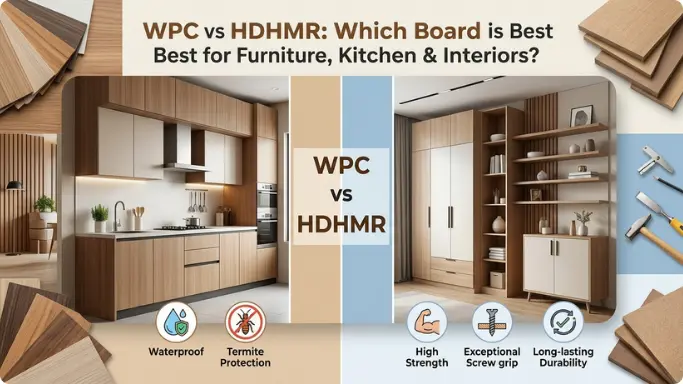
The selection process for furniture materials and interior materials stands as the fundamental choice for home and commercial space design. The choice of board materials for furniture construction determines how long the furniture will last and its visual appearance and future functionality. WPC (wood plastic composite) and HDHMR (high density, high moisture resistance) boards are two of the most preferred building materials in contemporary times. Modern interiors widely incorporate both materials, which designers use to create kitchens and wardrobes and cabinets and furniture. Homeowners and designers can choose their ideal solution by learning about the various options available.
This guide explains the features, benefits, and differences between WPC and HDHMR boards so you can decide which board is best for furniture, kitchen, and interior projects.
What is the WPC Board?
Wood Plastic Composite (WPC) is a combination of plastic and wooden fibers that produces a strong and long-lasting board that is very resistant to moisture, insects (including termites), and environmental elements.
Due to these benefits, WPC is very popular in the construction of lightweight, easily transported interior products. Additionally, WPC can be carried without worrying about damage due to humidity or spatters from appliances in kitchens and bathrooms, as well as on outdoor furnishings.
Some of the top characteristics of WPC include:
- Completely waterproof
- Termite & pest resistant
- Extremely durable & can last throughout normal life cycles
- Low maintenance requirements
- Good for installation in humid areas such as kitchens & bathrooms.
WPC is frequently used in creating modular kitchen cabinets, cabinets in the bathroom, and other furniture found in areas exposed to moisture.
What is HDHMR Board?
Densely packed high moisture resistant board, or DHP (HDHMR), uses wood fibers and resin pressed under high pressure and heat to produce a thick board that is denser and stronger than traditional MDF or particle boards.
HDHMR is well suited to provide a high level of screw retention and strength, which have made it a preferred material for use in furniture manufacturing and productions of interior work.
Important Properties of High-Density, High-Moisture-Resistant Board
- Densely packed high-moisture-resistant board
- Greater resistance to moisture than MDF
- Smooth finish suitable for laminates and veneers
- Excellent screw retention
- Durable and long-lasting for furniture and interior applications
Common uses of HDHMR include for wardrobes, storage cabinets, shelving systems, and decorative furniture used to furnish homes or offices.
Difference Between WPC and HDHMR Boards
Making a good choice for an internal project can be easier when you understand the main distinctions of these materials.
1. Water Resistance
WPC (wood-plastic composite) boards are completely waterproof, making them an ideal choice for kitchens, bathrooms, and any spaces exposed to direct moisture. HDHMR (high density, high moisture resistant) boards are resistant to moisture but are not fully waterproof.
2. Strength and Density
HDHMR boards have a very high density and hold screws well, thus making them a strong option for pieces of furniture that need that weight-bearing support. WPC boards, though durable, have a lower density than HDHMR boards.
3. Termite Resistance
WPC boards cannot be damaged by termites 100%, and HDHMR boards are at risk of some termites, so although classified as moisture resistant, they are still at
4. Weight
HDHMR boards are heavier compared to WPC boards; therefore, you will find WPC boards make them easier to work with.
5. Cost
The cost of WPC boards is typically more than that of HDHMR boards due to the waterproof and termite-proof nature of WPC boards.
Best Applications for WPC Boards
In wet areas, WPC board is an excellent choice for applications such as
- Modular kitchen cabinets
- Bathroom vanities
- Outdoor furniture
- Wall panels and partitions
- Waterproof furniture structures
Given their waterproof properties, using WPC boards in kitchen interior design is highly beneficial.
Best Applications for HDHMR Boards
HDHMR boards are frequently used in various interior furniture and decorations.
Examples of common applications include:
- Wardrobe and closet
- Bedroom furniture
- Office furniture
- Ironing boards/cabinets
- Interior decorative panels
A smooth surface can provide suitable substrates when applying laminate, veneer, or paint to HDHMR boards.
Which Board is Best for Kitchen Interiors?
In general terms, WPC boards are the preferred option for cabinets and furniture in kitchen interiors as they can withstand the moisture, spills and humidity that are present in kitchens. WPC boards are waterproof, which protects them from swelling, damage and the growth of fungus.
HDHMR boards are also an option for kitchen furniture but must have the appropriate laminate and edge sealing to protect them from the above issues.
Which Board is Best for Furniture?
There are pros and cons to both types of furniture boards. If you require an excellent screw-holding ability, then HDHMR furniture boards are an ideal choice for your closets, beds, and storage spaces. If you need something that can withstand moisture-damaged areas, then WPC boards will work best in these scenarios.
A number of interior designers will use a mix of both board types in order to ensure long-lasting, durable, and cost-efficient products.
WPC vs HDHMR: Which One Should You Choose?
Depending on your application and surroundings, you have two options when it comes to materials: WPC or HDHMR.
WPC boards would be perfect for areas such as the kitchen/bathroom if you’re looking for a material that has waterproof features, is impervious to termites, and requires little maintenance.
HDHMR boards would be perfect if you are looking for sturdy, reliable boards for use in furniture, wardrobes, or any kind of interior cabinetry.
WPC and HDHMR are both great, modern solutions for both interior design projects and manufacturing furniture, and there is no doubt that either of these will provide better options than traditional laminate, plywood, and MDF.
Conclusion
Choosing the correct board when designing your home is an important aspect of achieving long-lasting durability and optimal function. Knowing about the properties of the two main types of boards—WPC and HDHMR—will help consumers to make decisions concerning the design of their kitchen cabinets, wardrobes, and furniture.
Although WPC boards are very water-resistant and insect-resistant, HDHMR boards are known for their strong structural characteristics and the availability of fine finishes on the products manufactured with these boards. By selecting the right type of material according to your requirements, you can provide your home or workspace with a very attractive and durable finish.