
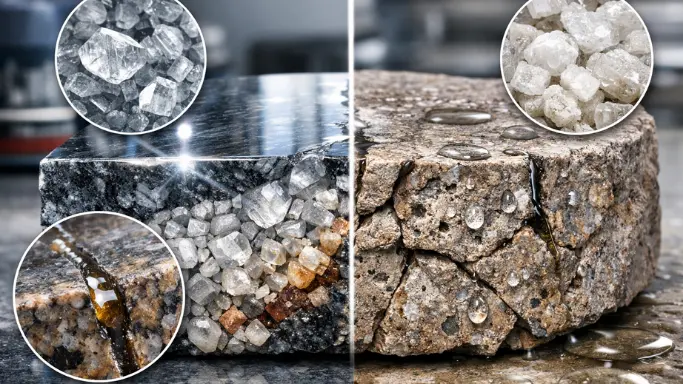
Due to the strength and eternal beauty of natural stone, there is a great deal of use for it in homes as flooring, countertop surfaces, stair treads, and wall coverings. One factor that has a significant impact on the look and life of your stone is porosity. The amount of natural stone affects the process by which the stone’s imperfections, such as cracks or fissures, have a bearing on the result of the polishing process. Some stones appear to be polished to a high lustre, while others appear somewhat dull after they have been polished. This variance is primarily due to what is inside the natural stone itself, based on its internal structure and mineral makeup. At Home Maintenance Services, we educate homeowners about the natural properties of their stones as they relate to the final finish and how they can achieve superior results with the same professional treatment as other homeowners.
Pores are very small holes located within a rock or a natural stone, and they let air, water, or other substances penetrate the outer layer. For example, marble and limestone tend to be more porous than granite. Highly porous stones absorb water and polish better than dense or low-porosity stones because they are more easily penetrated by moisture and polish compounds. When porous stones absorb these materials, it can lead to less reflection of light and lower levels of overall shiny finish than a similar dense stone would have when polished. So, understanding how porous a natural stone may be before beginning to polish it is important.
Cracks and fissures are frequently observed in natural stone. Not every crack is a flaw; on the contrary, many are caused by nature’s own processes and represent natural formations brought forth through geological changes over many, many years. Both types of surface imperfections can negatively affect the polish quality of the stone. Surface cracks can cause a poorer quality of polished surface due to uneven pressure applied to the area by polishing machines as they pass over broken areas of the stone. Additionally, dust and moisture will settle into the cracks, creating dull areas post-polishing. Fissures are small, hairline separations that are typically found in granite and marble. These small separations typically prevent the reflection of light from being smooth across a surface. Although most fissures do not typically compromise the integrity of a stone, they can make it difficult to produce a uniform gloss or shine on the surface of the stone if they are not properly filled and ground.
Mineral composition plays another major role in determining how well a stone polishes. Natural stones develop through the combination of various minerals that undergo the process of extreme heat and pressure. The mineral content of granite shows that it has high quartz levels, which classify quartz as a highly durable mineral. The hardness of granite enables it to produce a superior shine that lasts longer than other materials. Marble and limestone contain calcite as their main component, which makes them more vulnerable to scratches and etching damage because calcite is a softer material. The stones can achieve a stunning high-gloss appearance, but they need precise polishing methods and continuous care to maintain their look. The presence of both hard and soft minerals in stones results in uneven polishing, which creates a rough surface texture during the polishing process.
The effect of porosity in natural stone becomes more apparent with the passage of time. The porosity of stones leads them to absorb both water and cleaning chemicals, which results in the development of stains and discoloration and dullness. Unsealed surfaces permit moisture to enter through their cracks and fissures, which results in the loss of polished shine. Low-porosity stones, in contrast, resist absorption and maintain their finish for a longer period. This is why sealing is an essential step after polishing. Our team at Home Maintenance Services recommends sealing to protect surfaces from stains while increasing their durability.
The process of professional polishing needs to follow multiple essential procedures. The first step requires inspection of the stone to find all cracks and fissures and to determine its mineral composition. Grinding begins as the operator uses the machine to create an even surface while removing all visible scratches. The team uses premium resin to fill all cracks and pores, which results in a smooth foundation. The team uses diamond pads to polish the surface through multiple stages until they achieve the desired level of shine. The application of sealing material protects against porosity while enhancing the product’s durability. The entire process creates an outcome that delivers both a glossy appearance and a strong, lasting surface.
Polished stone requires regular upkeep to stay in good condition. The combination of pH-neutral cleaning products with immediate spill cleanup and restricted use of strong chemicals protects the material from harm. The team recommends the presence of periodic resealing for porous stones, which helps to sustain their protective qualities. The need for professional repolishing will emerge after multiple years based on how frequently the stone gets used and its material composition.
Natural stone porosity controls the way cracks and fissures and minerals impact the polishing results of stones. The unique properties of each stone type establish its shine characteristics, durability, and maintenance requirements. The best results will occur when proper inspection and repair and polishing and sealing processes are followed. Home Maintenance Services offers expert protection and permanent shine solutions for marble, granite, and all natural stone surfaces through their customized services.